Friday, April 18, 2008

Friday’s Curio’s

Posted by AT & EE staff


Did you ever want that feeling of living in a modernistic dwelling that is minimalistic as well as portable. You might try a Loft Cube. Who says that you can't take it with you?


Ever see a two-dollar bill? Check out this story "The 2 Dollar Bill"


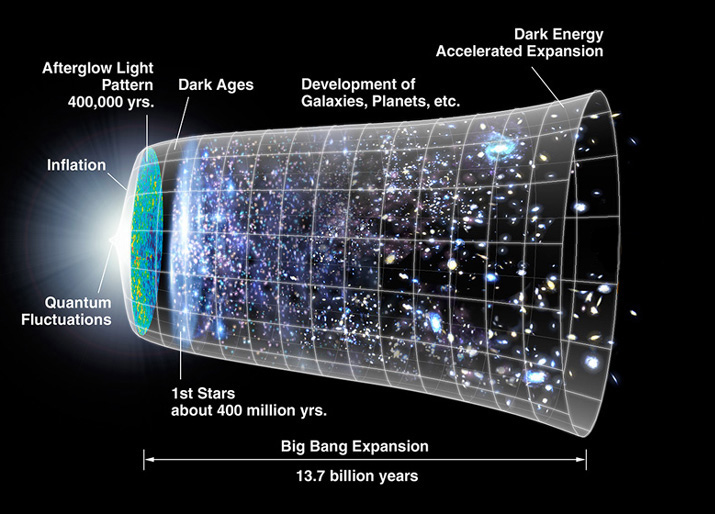
We have all seen timelines of history, but have you ever seen the timeline of the Big Bang Expansion?


Speaking of timelines, HyperHistory is an expanding scientific project presenting 3,000 years of world history with an interactive combination of synchronoptic lifelines, timelines, and maps.


Thats it for today.


Wednesday, April 16, 2008

Energy: Solar Balloons, Too Good To Be True Adopted

German schoolboy, 13, corrects NASA's asteroid figures: paper

Posted by  AT&EE Staff


German schoolboy, 13, corrects NASA's asteroid figures: paper


This artist's rendition released by NASA shows an asteroid belt. A 13-year-old German schoolboy corrected NASA's estimates on the chances of an asteroid colliding with Earth, a German newspaper reported Tuesday, after spotting the boffins had miscalculated.


Read it all...


,

Monday, April 07, 2008

10 Ways the Internet (As We Know It) Will Die - GigaOM

Posted by AT&EE Staff

10 Ways the Internet (As We Know It) Will Die - GigaOM


We often think of the Internet as a platform for unfettered global communication, where information flows freely, innovators can launch new applications at will, and everyone can have a voice. But it’s unlikely that our children’s Internet will look anything like what we have now.


How might the Internet as we know it die? Here are 10 possibilities.


1) Someone subverts the Domain Name Service. The Internet relies on DNS. But if someone broke — or worse, subverted — the fundamental way in which we find web sites, we wouldn’t trust URLs any more. Phishing would be easy. Own the DNS and you own the Internet.


Read it all...


Dial D for Disruption - Forbes.com

Posted by AT&EE Staff


Want to build a phone company for $100? Give Mark Spencer a ring.


In a research park outside the low-key bustle of downtown Huntsville, Ala. Mark Spencer finishes his barbecue and resumes wreaking havoc on the multibillion-dollar phone equipment business.


Spencer is the inventor of Asterisk, a free software program that establishes phone calls over the Internet and handles voicemail, caller ID, teleconferencing and a host of novel features for the phone. With Asterisk loaded onto a computer, a decent-size company can rip out its traditional phone switch, even some of its newfangled Internet telephone gear, and say good-bye to 80% of its telecom equipment costs. Not good news for Cisco (nasdaq: CSCO - news - people ), Nortel or Avaya (nyse: AV - news - people ).


"We have to figure out ways to get into everything: Carriers, businesses, equipment companies," says Spencer. "For better or worse, I don't tend to think small."


Spencer, who is all of 29 years old, is poised to disrupt the $7 billion market for office telecom switches (often called PBXs) much the way the Linux open-source computer operating system crushed the price of business computing and brought woe to established leaders such as Microsoft (nasdaq: MSFT - news - people ) and Sun Microsystems (nasdaq: SUNW - news - people ).  Read it all...


,,